
Trumbull County Three-Day Releases
No official Trumbull County page lists every person released during a rolling three-day period. The Sheriff's PublicView separates Current Inmates from Historic Inmates. Historic mode is identity based. It requires a search term and may ask for a narrower query when too many records match. It cannot be treated as a browse-all release feed.
The three-day method is still useful. It lets a reader revisit Friday through Monday activity, compare several recorded dates, or account for a search that was not made at the moment of book-out. Each result remains tied to one Booking ID. The recorded Release Date must fall within the period being checked, and the record must match the right person.
Review Trumbull 72-Hour Releases
Begin with the person, not the date. A broad blank or rejected query is not evidence that nobody was released. The Trumbull County released inmate search covers the broader named-person route when the relevant custody system is unclear.
- Set the start and end of the three-day period, including the time of day when precision matters.
- Open PublicView, choose Historic Inmates, and enter the person's first and last names.
- Use age, race, or gender only as needed to separate similar results. Match the date of birth and Booking ID.
- Open the correct booking and read Booking Date, Release Date, Scheduled Release Date, court, and case number.
- Compare the actual Release Date with the chosen period. Do not substitute the scheduled date.
- Search Current Inmates for a newer episode and check the court docket or successor agency before describing the destination.
The Sheriff's official search page confirms that both current and historic records are available. Historic retention is not published. An older or missing result may require a request for the source record.
Trumbull Three-Day Record Fields
PublicView is a booking system, so its fields need context. The top-level date applies to the booking episode. Offense rows may carry separate dates and legal labels. Use the court and case number to connect the operational jail event with the durable legal record.
| Field | How to use it |
|---|---|
| Name and date of birth | Confirm identity before comparing dates or photos. |
| Booking ID | Separate one jail episode from another and route a focused request. |
| Booking Date | Marks the start of the episode shown on the card. |
| Release Date | Marks the end of that booking episode, subject to later-custody checks. |
| Scheduled Release Date | A changeable planning field, not proof that release occurred. |
| Arresting agency and facility | Identify the agency and setting tied to the booking. |
| Court and case number | Lead to the docket for bond, sentence, dismissal, or transfer context. |
Cards may also show a booking photo, status, and first charge. Details add physical descriptors, offense release dates, bond, next court date, and sentence wording. A top-level release date should not be applied to every charge without reading the offense entries.
Trumbull Weekend Release Timing
The Sheriff states that releases occur 24 hours a day, seven days a week. They are not scheduled. Necessary paperwork must reach the jail, and officers must complete book-out. Workload, jail scheduling, and individual circumstances affect the time. A Friday court entry can precede the actual jail exit, while a weekend book-out may not be reviewed until Monday.
A 72-hour review reduces the chance that a reader focuses only on one calendar date. It does not remove data lag. The current-roster frontend refreshes hourly while open, but the Sheriff publishes no guaranteed cadence for historic additions. Direct jail confirmation is the sound route when timing depends on a current answer.
Note: Keep the recorded release date in notes because a rolling three-day label soon becomes stale.
Request Trumbull Release Records
For unresolved county-jail facts, call the Adult Justice Center at 330-675-2508 or use the Sheriff's NextRequest portal. A useful request asks for an existing booking and book-out record for a named person and date range. Include date of birth, Booking ID, case number, recorded Release Date, release disposition or type, and a transfer destination if that field is nonexempt.
Ohio public-records law uses prompt inspection and copies within a reasonable period. No fixed Sheriff response deadline or copy schedule was verified. Ask for electronic delivery and a cost estimate. If legal effect matters, request the court journal entry by case number. Common Pleas handles felony dispositions, while municipal and district courts may hold misdemeanors and preliminary felony records.
For the narrower same-day review, use the Trumbull County 24-Hour Release List. Both workflows rely on the same identity search because no separate feed exists.
Trumbull Release Status Boundaries
A current PublicView booking means the person remains in the Trumbull jail data set for that episode. A historic Release Date confirms that the episode ended. Search both modes because a person can have an old historic booking and a new current one. Roster disappearance alone is not proof of release.
If the county record suggests transfer, check the ODRC Offender Search, VINELink, the court docket, or the named agency. An ODRC Incarcerated result means state custody. APA Supervision indicates release from prison under state supervision. A Released status confirms a prior ODRC departure, but does not rule out newer custody.
- Release Date
- The recorded end of a specific booking episode.
- Scheduled Release Date
- A planned date that can change before physical book-out.
- Transfer
- A move between custody agencies rather than an unconditional return to the community.
Trumbull Historic Release Search
The official PublicView interface makes the local limit visible: the user must choose Current or Historic and supply identity terms. It is stronger for verifying one known release than for counting all releases during a weekend.
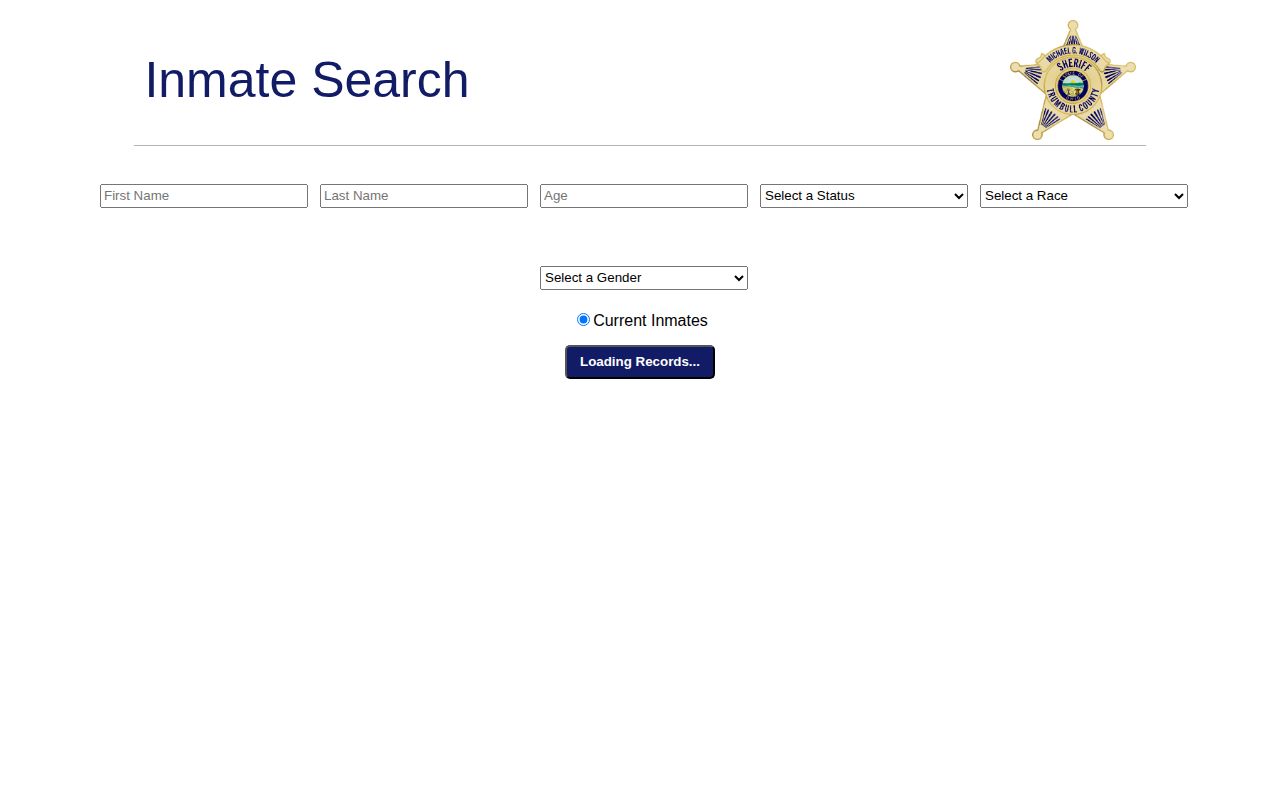
The screen supports identity filters and booking details, but it has no 72-hour selector. This avoids turning a historic search into an invented public feed.
Match Trumbull Release Dockets
A release date answers when the jail episode ended. The court journal may answer why. Use the exact court and case number in the offense details. Warren, Niles, Girard, Newton Falls, Central, and Eastern courts may hold the early record, while Common Pleas may hold the later felony disposition after bind-over or indictment.
Bond, dismissal, no bill, time served, and sentence completion are not interchangeable. Quote the source's wording. If the jail entry and docket leave the release type unclear, ask the Sheriff for the existing book-out record instead of asking the office to investigate a present location.
Trumbull Three-Day Fallback Chain
Different custody systems require separate follow-up. VINELink may report a release, transfer, escape, or death from a participating county jail, ODRC, or the Department of Youth Services. Identify the reporting agency before interpreting the event. Ohio describes VINE as a notification service and warns users not to rely on it alone. A missing result may reflect spelling, delay, agency participation, or post-release visibility.
Use ODRC only when state custody is plausible. Search by an exact offender number, or by name, and repeat with All if a Released-only filter produces no result. Match date of birth, commitment county, docket, and offense. County of Commitment is the sentencing county, not the prison's location. A person held at Trumbull Correctional Institution may have a commitment from elsewhere, while a Trumbull sentence may be served at another Ohio prison.
Federal custody has another boundary. A BOP Released or Not in BOP Custody result means only that BOP no longer holds the person. Immigration or local custody can follow. The ICE locator can show some releases from ICE custody for a limited period, but it is not a county release feed. Each result must stay attached to the agency that created it.
Build a Trumbull Release Timeline
A three-day review works best as a chronology. Record the Sheriff Booking Date and Release Date first. Add the court order date, then any ODRC admission or supervision date. These dates need not match. Paperwork, transport, reception, and source updates occur at different points. A difference between systems does not itself prove an error.
When sources conflict, attribute each fact instead of selecting the most convenient one. The signed journal entry is the better source for legal authority. The responsible agency's record is the better source for physical custody. A later Current Inmates record can coexist with an older historic release, and a county book-out can be followed by state intake. That sequence is why “left this jail” should not become “returned home” without support.